

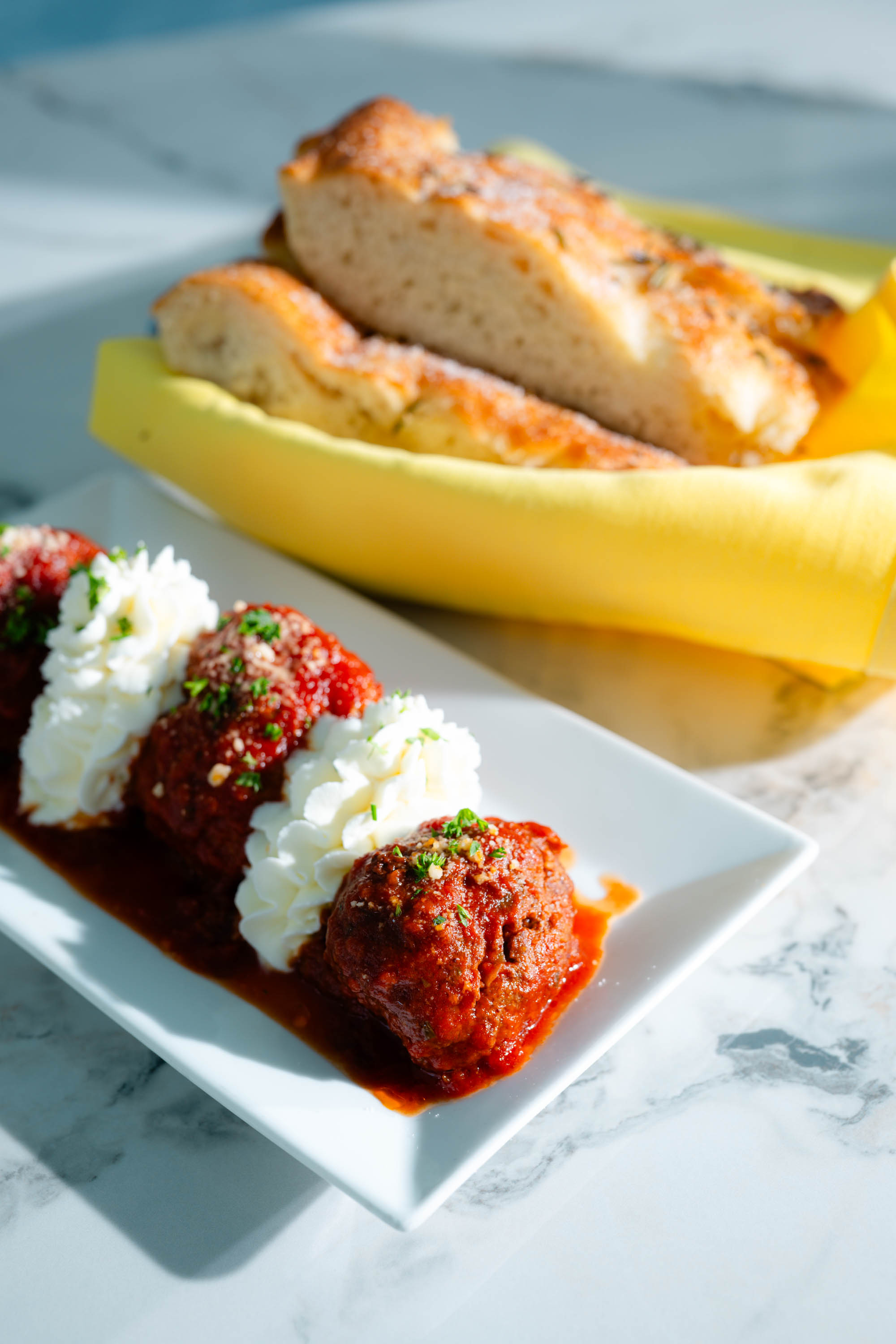
The focaccia reaches the table in warm, golden batons, its dimples glinting with coarse salt and flecked with rosemary. At Acqua Pazza, a stretch of Italian shoreline dropped into Downtown Wellen Park, the kitchen bakes it fresh every day. Beyond an arch of majolica-style tile, the dining room glows sky blue and white over marble floors. Partner David Valentino gestures to the details. “Amalfi, certainly,” he says. “Those splashes of yellow, those seaside pastel colors.”
Valentino weaves his story with a lawyer’s eye for detail and a grandson’s pride. Born in New Jersey, he moved with his family to Scotland at around 14, where they ran a small hotel with a restaurant and pub. “My mother’s family goes back in the restaurant business to some of the oldest establishments in New York City,” he says. By 21, his parents had relocated to Florida. Visiting them on spring break, he set foot on Siesta Key Beach and wrote his university a letter: he would not return. “I was just enamored with it here.” After law school, he practiced corporate law in Atlanta before a brief stint as a Sarasota County prosecutor.
In 2003, he and his brother Dennis took over Donato’s, the Port Charlotte restaurant their father had opened seven years earlier. Valentino assumed he would keep practicing law alongside the new venture. “A very naive idea,” Valentino says. More than two decades on, the brothers and their partner Mark Costanzo run D&D Restaurants, which operates eight dining rooms across Southwest Florida, from the coal-fired Bocca Lupo pizzerias to The Banyan House across the street, where nephew Derek Valentino now captains the kitchen.
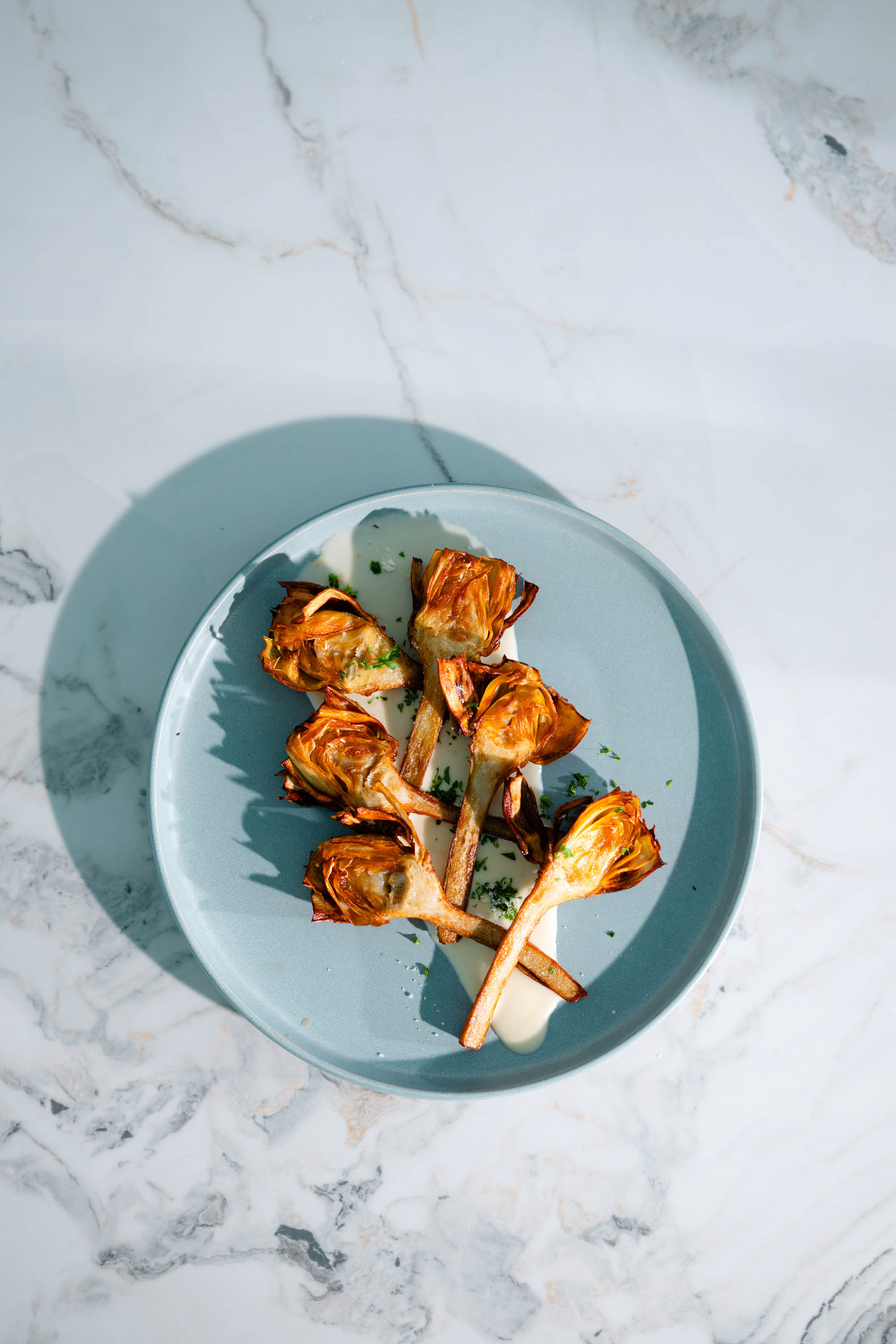
From the bar, the Strawberry Serenade blushes pink from rose and fresh juice, mixed with elderflower and vanilla, a strawberry balanced on the rim. The Roman artichokes make a persuasive opener. Halved and fried, their outer leaves crunch while the hearts turn tender in parmesan cream. “Simple but pretty,” Valentino says.
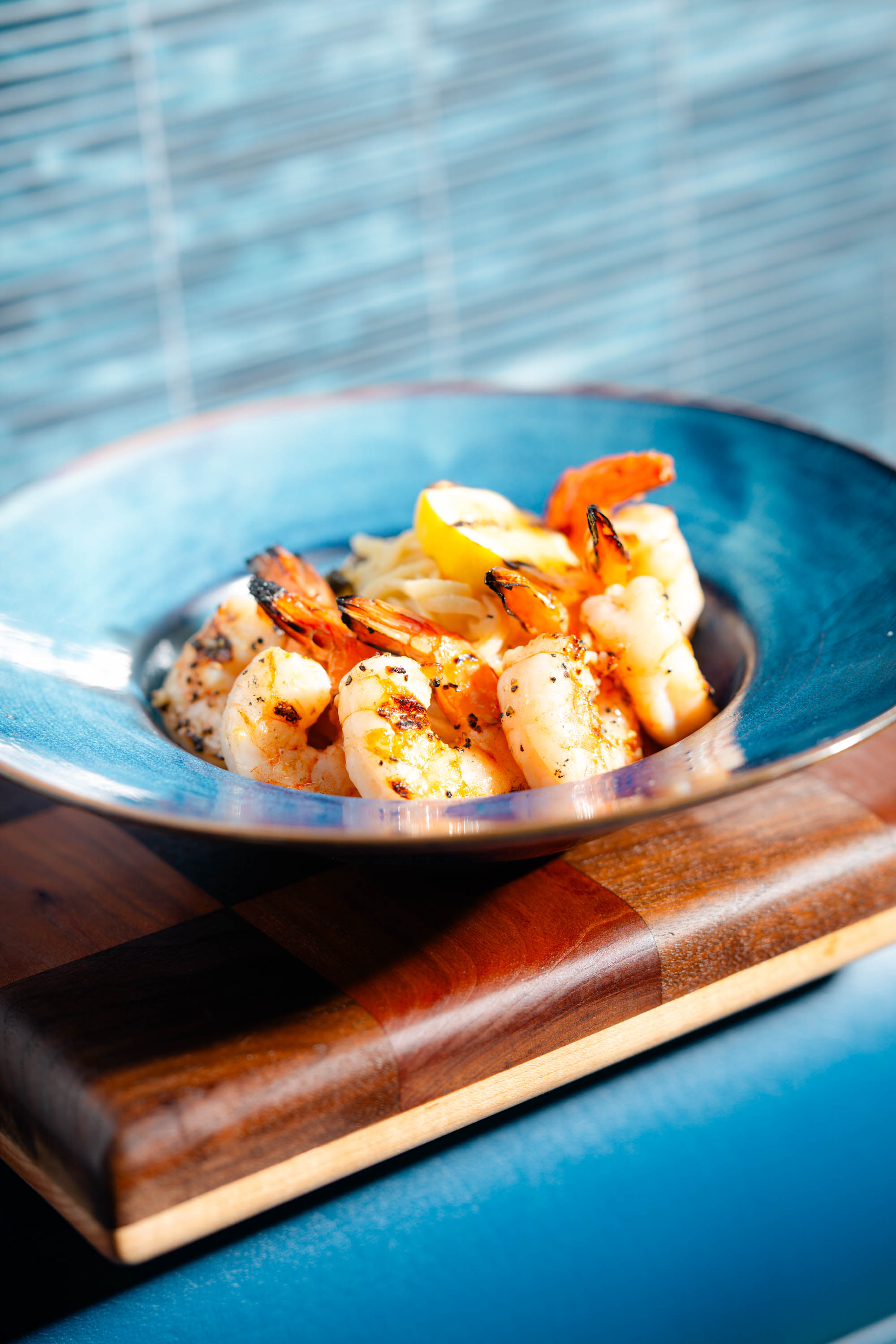
The name Acqua Pazza, meaning “crazy water,” belongs to a southern Italian dish of white fish poached in a light tomato broth. Folklore supplies saltier roots: one old Neapolitan story has fishermen cooking the day’s catch in a roiling pot of seawater with aromatics and whatever was on hand, salt too dear. “It’s probably romanticized,” Valentino says, “but all the best things in life are.” Here, the brothers plot the menu along Italy’s coastlines. “I guess if Donato’s is New Jersey, this is a little more Positano.” Linguine vongole features Cedar Key middleneck clams in a white wine sauce. “Being local is perfectly Italian, right?” Valentino asks. So is the right glass. The clams call for Dalia delle Venezie, a Pinot Grigio from Italy’s northeast, all green apple and pear, its lively acidity meeting the brine. Shrimp di Amalfi perches grilled shrimp on a bird’s nest of linguine in lemon cream sharpened by crisp capers; housemade lobster ravioli wade in velvety bisque sauce.
Even so, the menu meanders inland. “We wound up being a little broader than the original vision,” he says. Rome made the cut, and with it a lasagna nothing like his grandmother’s, still served up the road. Hers calls for ricotta; the Roman version swaps in béchamel. “They’re both beautiful,” he says. “I love serving them both. I love eating them both.” More focaccia arrives to chase the last of the sauce, baked by manager Angela Stinett, who has opened four concepts with D&D.
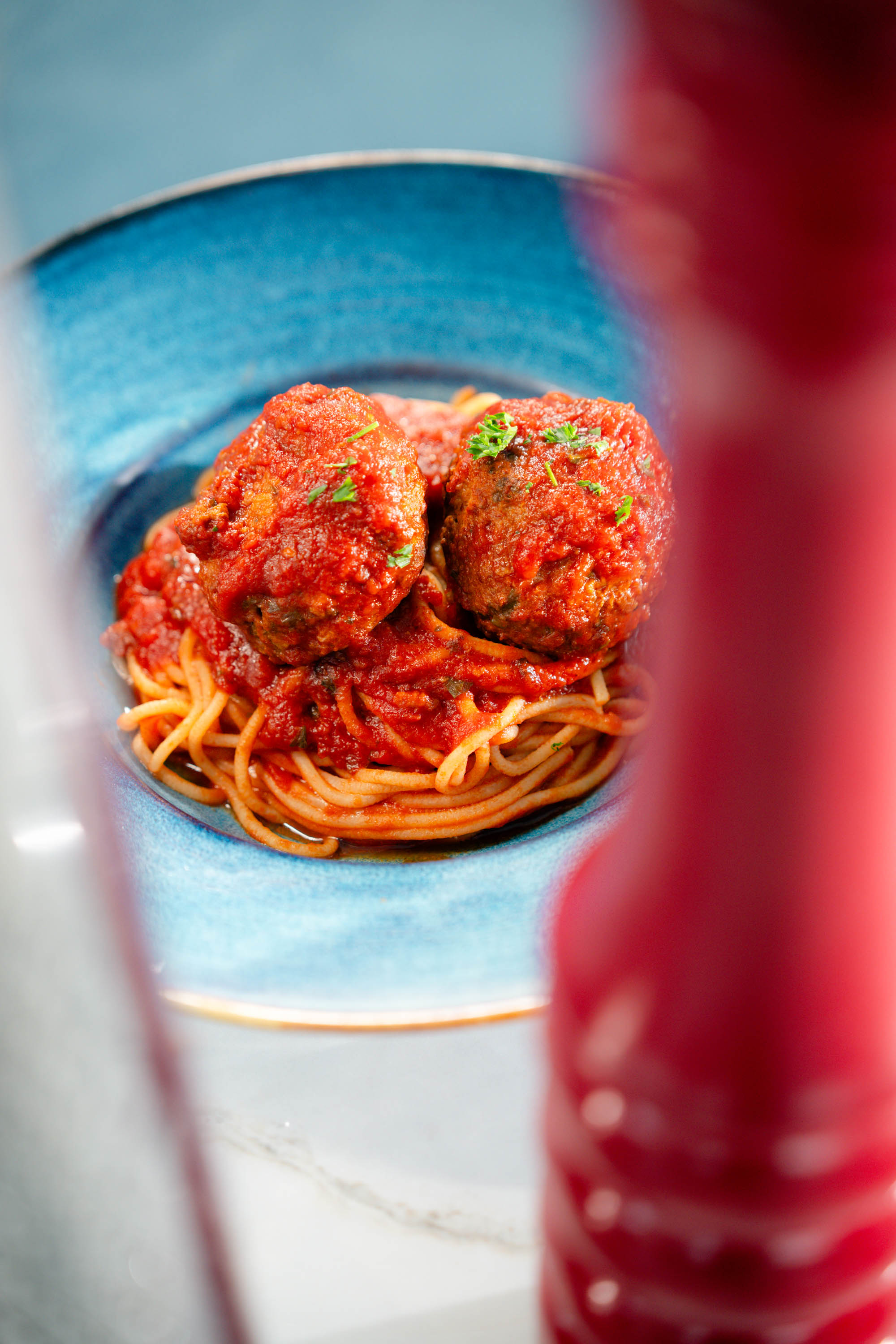
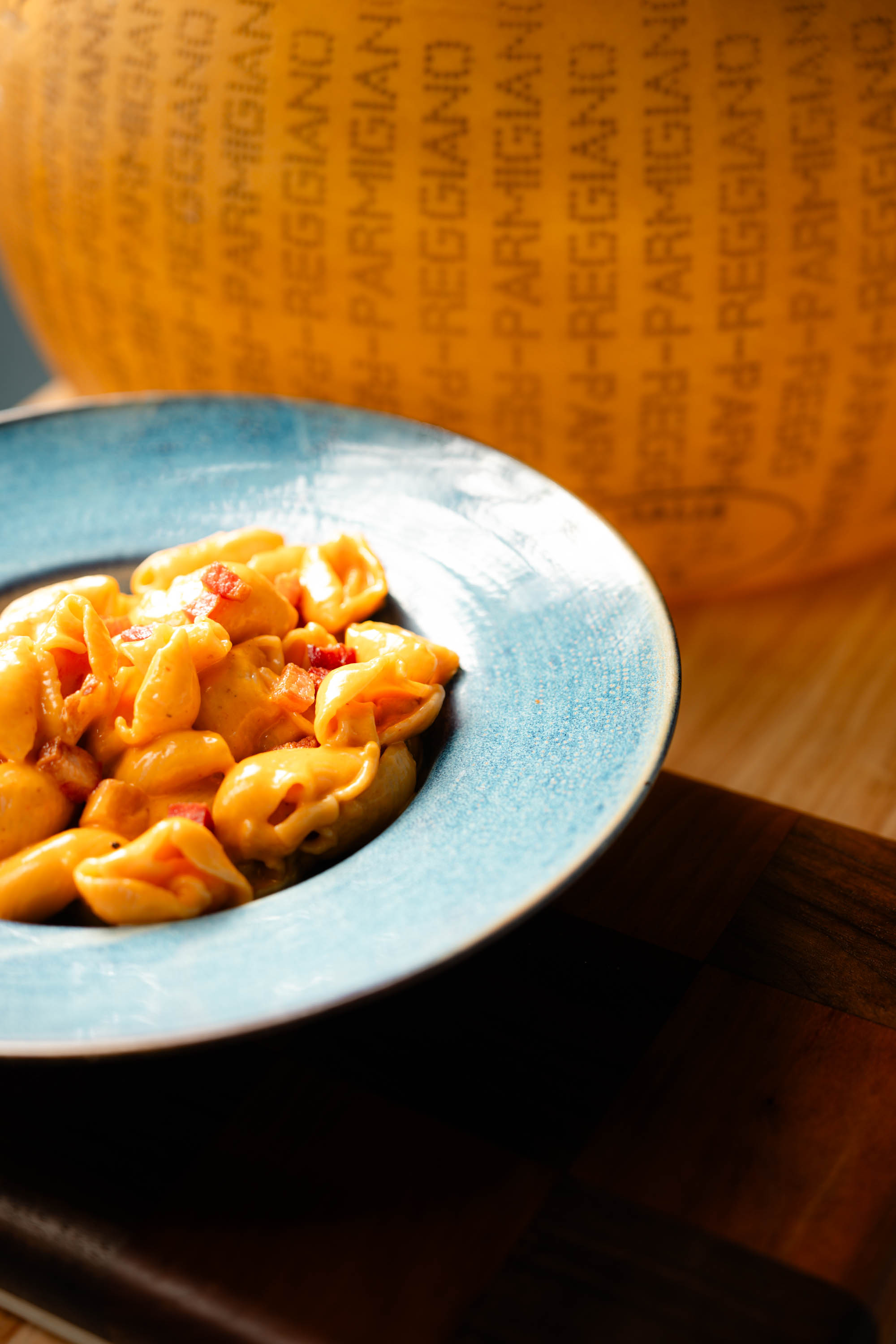
The Jersey side of the family claims a menu stalwart: burly meatballs of beef, pork and veal with airy, whipped ricotta. “They escaped the poverty of southern Italy and wound up in the poverty of tenement life in New York,” Valentino says of the immigrants who created this cuisine. “And it was still an abundance by those standards.” The meatball tells the tale in miniature, or rather, in magnum. In southern Italy, cooks padded polpette with bread when meat grew scarce. In America, meat fell within reach, and the meatball swelled into a heavyweight. “Pasta is always king,” Valentino says, and the pasta d’amore claims the throne outright. Large shells cup vodka cream in their curves, with clinging bits of pancetta and Calabrian chile. The cream coats the tongue first; the heat strikes a moment later. A recent trip to Puglia, the heel of the boot, sent Valentino home talking orecchiette, or “little ears,” tossed with sausage and broccoli rabe. “We took four trips this year. Very deliberate research trips,” he says. Mention stale bread, and Valentino turns erudite. In Matera, Basilicata’s cave city, he marveled at what cooks do with a loaf, and how Italy’s upscale spots now serve bread meatballs, celebrating “cuisine born out of necessity.” He smuggles versions of those dishes onto the specials board, as “the way I keep my own personal hand in.” The panzanella here always calls for yesterday’s bread. “My mother didn’t throw bread away; my grandparents didn’t throw bread away,” he recalls.
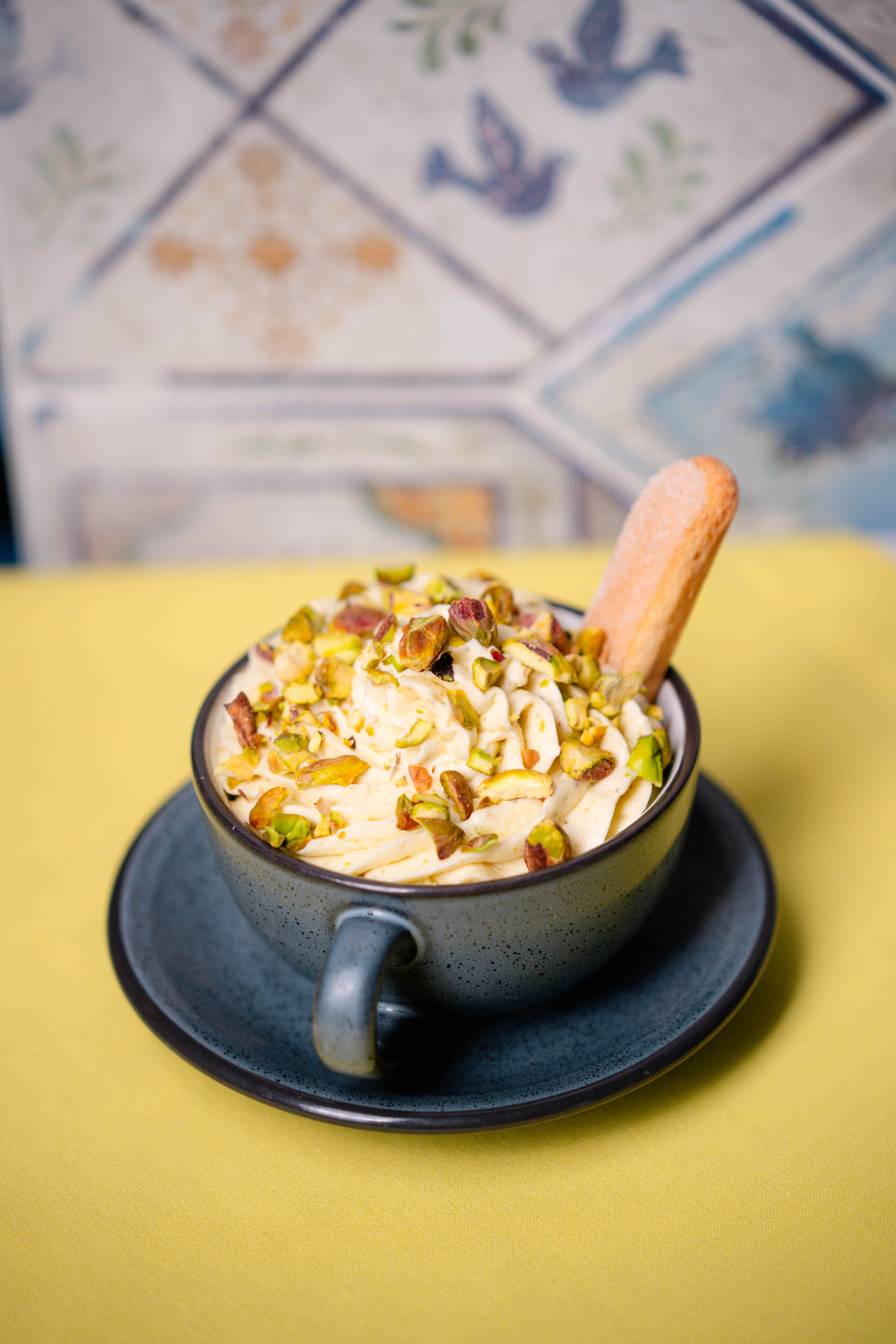
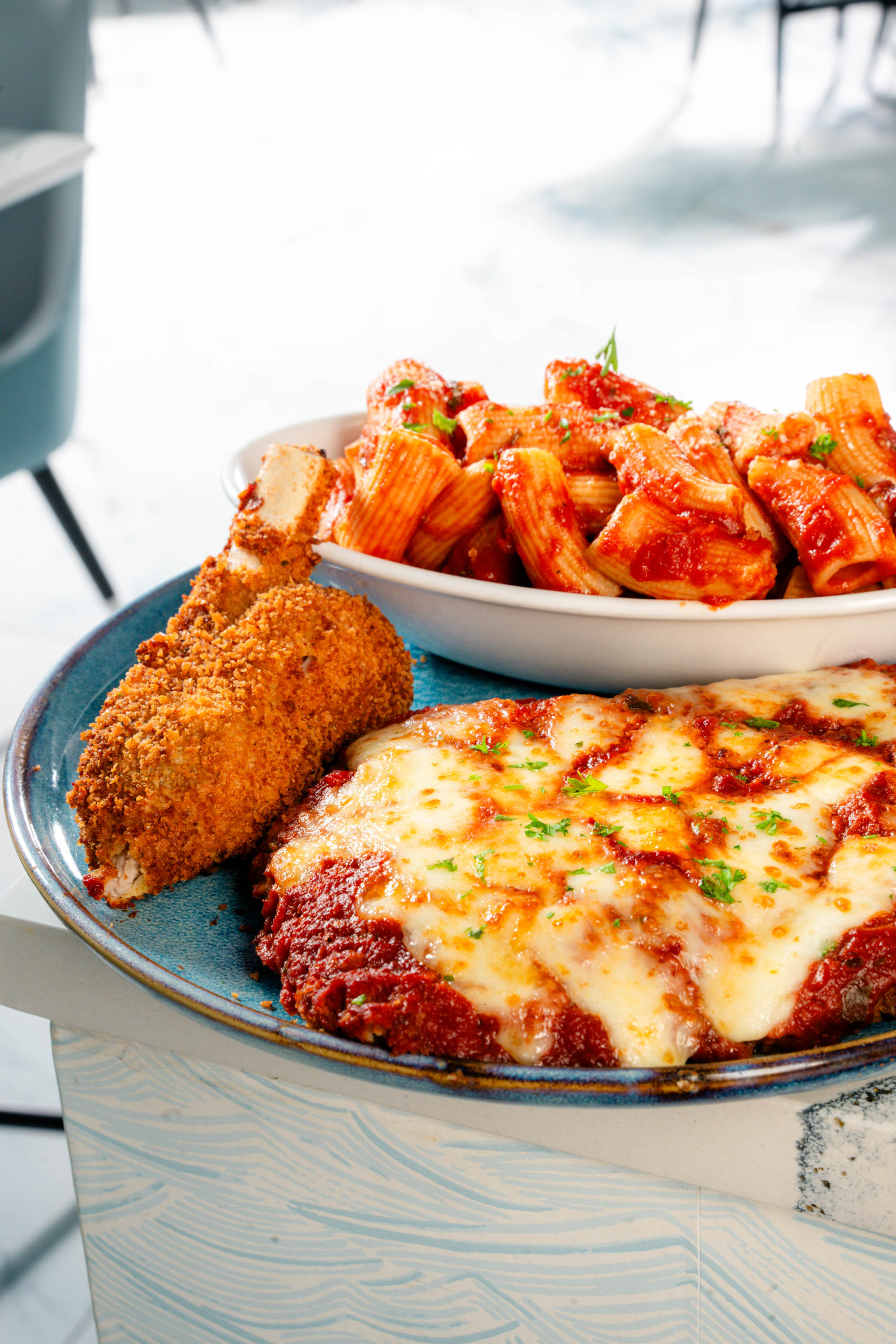
Jersey sneaks back in with the bone-in veal chop parmigiana, rigatoni riding shotgun and veal tender to the bone. The dish demands appetite and abandon. Farina’s Valpolicella Ripasso answers in kind, picking up dried cherry and a thread of spice, with enough grip to stand up to exuberant veal and cheese. Pistachio tiramisu closes the meal, its gentle nuttiness bright against espresso, unctuous but never cloying. By November, a new season menu joins the lineup. “Butternut squash ravioli, pumpkin tiramisu. We’re leaning into flavors,” Valentino says. Order artichokes first, tiramisu last. With so many restaurants to tend, Valentino won’t always be tableside to wax poetic about Matera or meatballs. Those nights, the specials board speaks for him. SRQ